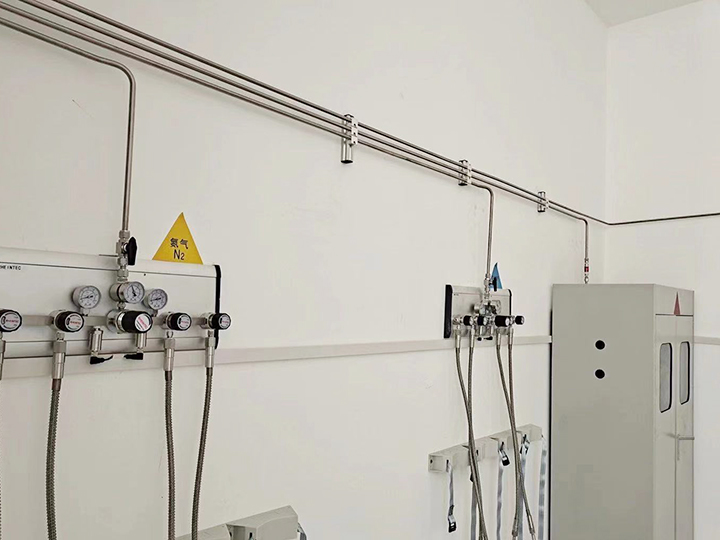
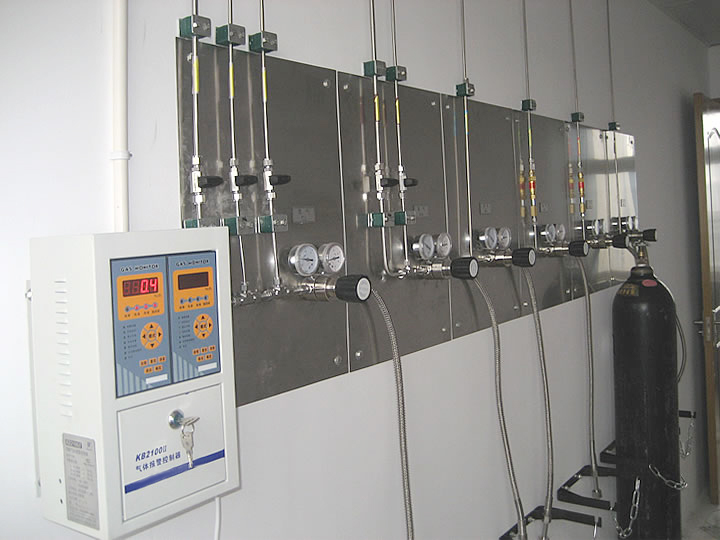
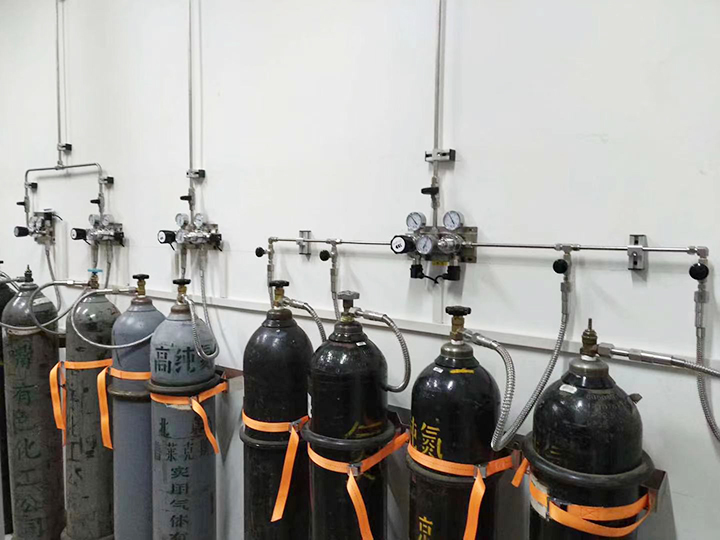
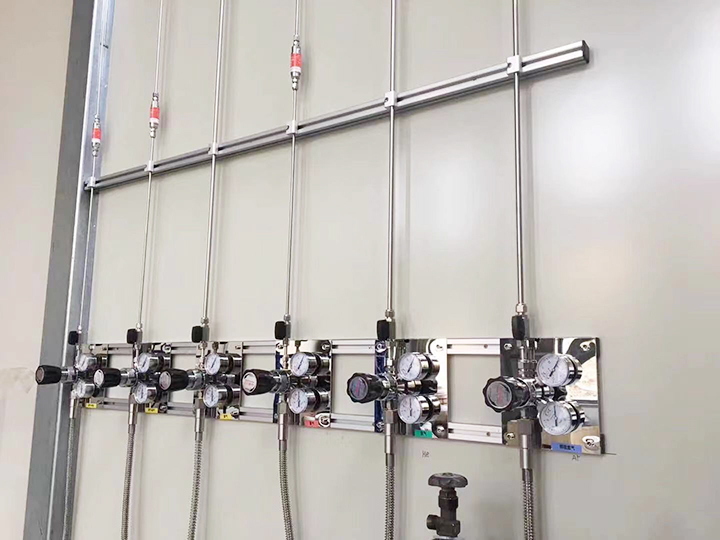
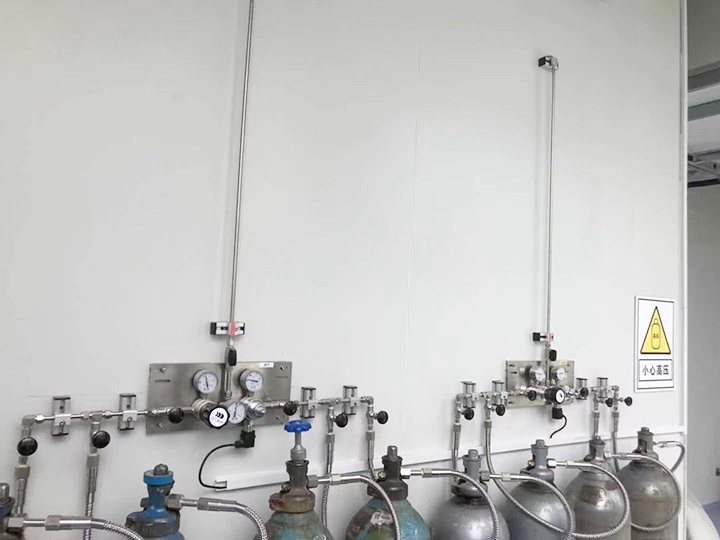
Laboratory air circuit
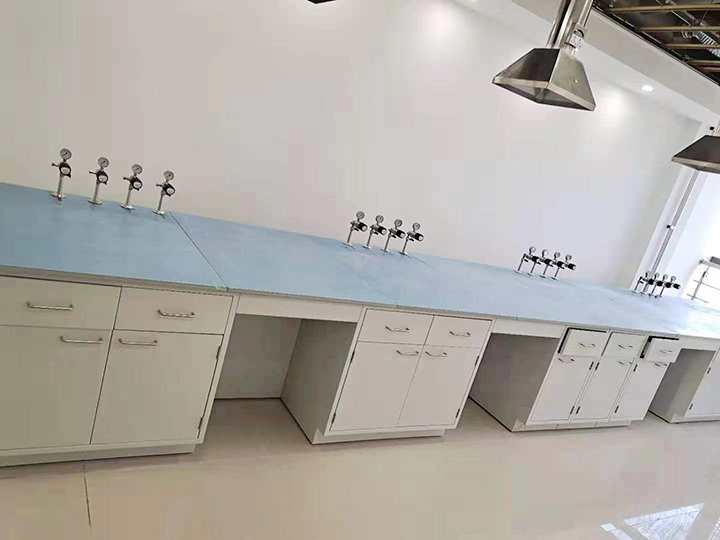
Requirements for laboratory gas lines:
1. All gas pipelines are composed of high-quality, fully annealed, seamlessly connected stainless steel pipes (BA grade). Copper tubes are only used at the ends of gas pipelines where gas purity requirements are not too strict. (such as a fume hood).
2. Gas pipelines must not be laid on the same rack as cables or conductive lines.
3. Flammable gases, such as acetylene, need to be introduced separately from other gases. If hydrogen pipelines are laid parallel to other combustible gas pipelines, their spacing should not be less than 0.5M; when they are laid across, the spacing should not be less than 0.25M. When laying in layers, the hydrogen pipeline should be located at the top.
4. The compressed air has a purification device on the pipeline to filter impurities and moisture. This purification device needs to be connected in parallel and isolated with a separate valve to facilitate maintenance of the filter device.
5. The connection of high-purity gas pipelines is seamless welding. Coupling fittings may only be used when connected to a valve or regulating device.
6. Each laboratory must have separate control valves, pressure reducing valves and pressure gauges.
7. The gas pipeline leading to the workbench must be installed with a separate control valve. Control valves that discharge various gases evenly should be installed on the workbench. It is recommended to install a gas purification device in front of the helium pipeline.
8. Every 1.5 meters or so, gas pipelines need brackets. In addition, set the appropriate bracket position according to the bending radius of the gas pipeline. All bends must be supported. All brackets of gas pipelines must be galvanized for anti-corrosion treatment.
9. Stainless steel pipe fittings can only be unsealed when installed on site. After unsealing, they must be purged with 5N high-purity gas before they can be connected to the system. After the entire system is installed, 5N high-purity nitrogen must be used for large-flow purging to ensure the cleanliness of the entire system.
10. After the installation of the air supply system is completed, relevant strength tests, sealing tests and stability tests shall be carried out as required.