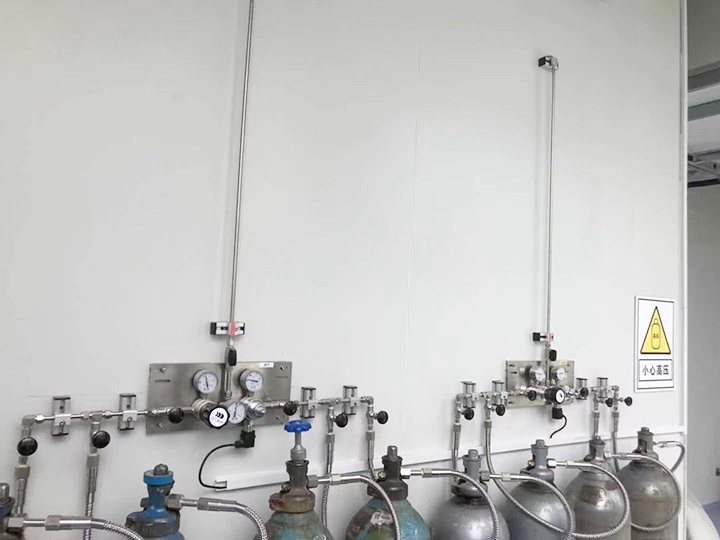
Laboratory air circuit
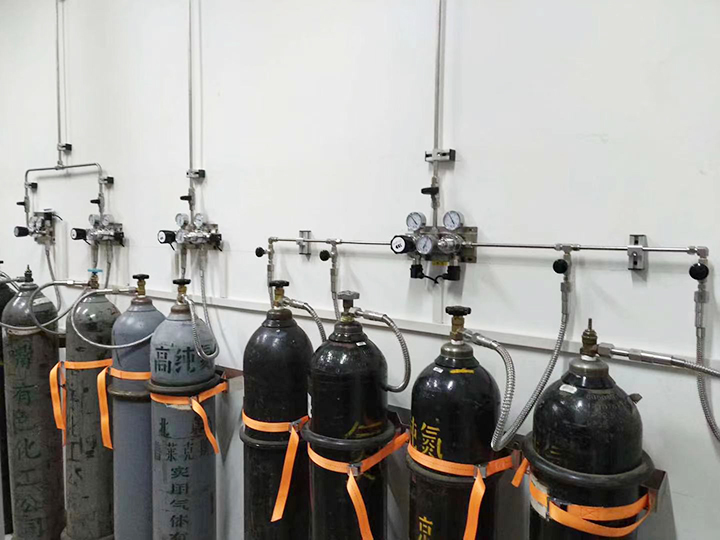
Overall requirements for laboratory gas circuit engineering:
1. The gas circuit system is mainly used for control equipment that handles high-purity gases, or toxic and corrosive gases. It is a real gas circuit system for laboratories. Mainly used in: laboratories, electronic microelectronics, petrochemicals, solar energy, analytical instruments, power plants and nuclear power, biopharmaceuticals, quality supervision bureaus, school scientific research, atomic absorption spectrometry, exhaust gas analysis, food packaging, offshore industries, medical/industrial laser industries and other high-tech fields.
2. The laboratory gas adopts a centralized gas supply method and is introduced through pipelines from a dedicated gas supply area outside the laboratory. Except for clean air produced directly by the air compression system, the other gases are supplied by high-pressure gas bottles.
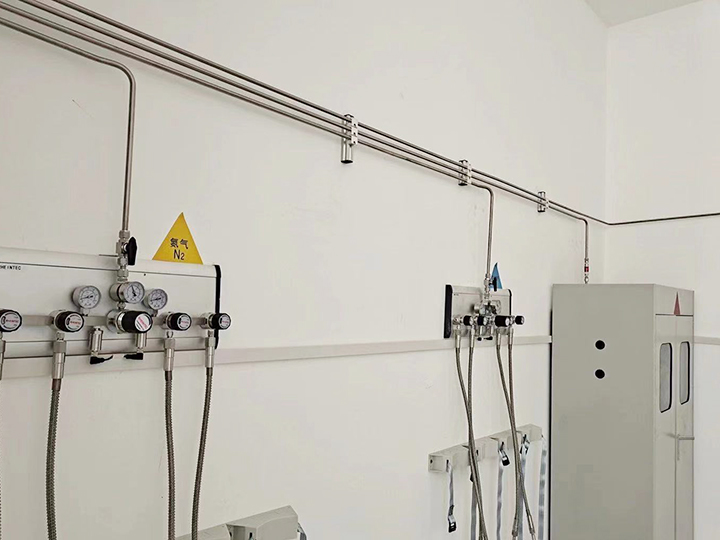
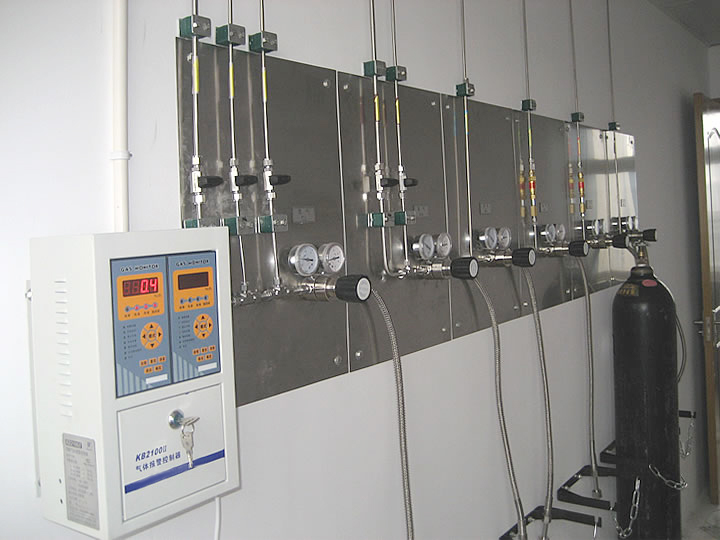
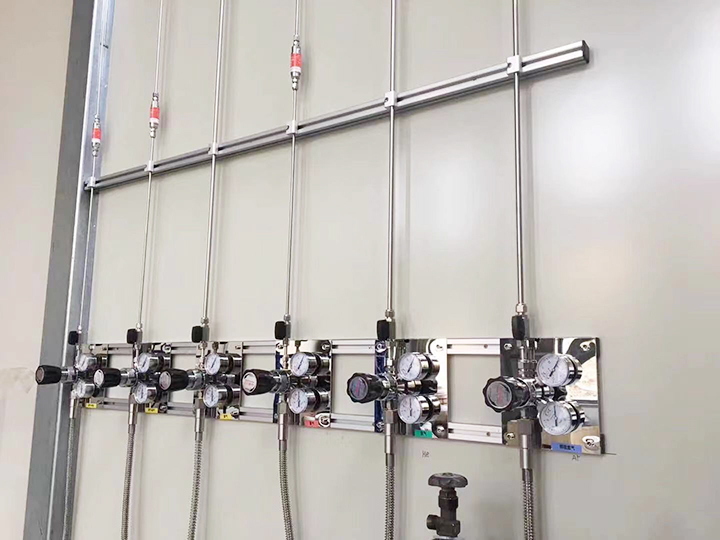
3. Each gas must have main and backup gas bottles, and an automatic switching panel should be installed for gas supply control to ensure uninterrupted gas supply. In addition, the main control valves and pressure reducing valves should be installed outside the laboratory. Laboratory gases are transported by stainless steel pipes (BA grade), generally within 1.5 meters and must be fixed on the wall with brackets. All pipes in the laboratory are installed under the ceiling and exposed along the walls. All lines are marked with the gas connected. Gas pipelines must be clearly marked every 1.5 meters to indicate the flow direction of the gas. All pressure reducers require an exhaust line leading out of the gas storage area. Flammable and oxidizing gas exhaust pipes cannot be combined together.