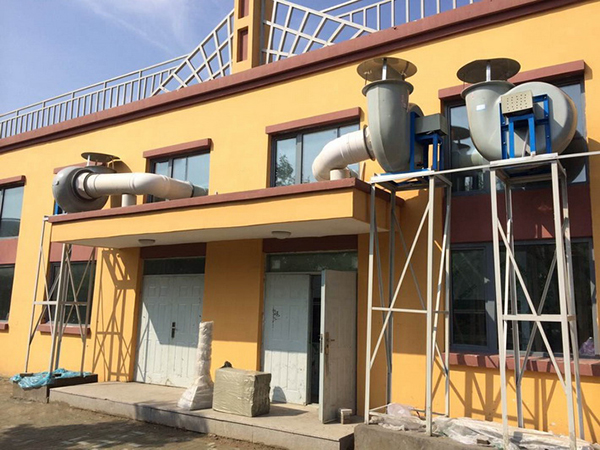
Do you know what aspects are included in the design of the laboratory ventilation system?
laboratory ventilation system design includes the following aspects:
1. Classification of ventilation systems
1. Overall ventilation
provides air circulation and ventilation in the entire laboratory. When harmful gases are generated over a large area and spread into the laboratory, they need to be discharged from the room in time, and some fresh air is also needed to supplement them to avoid negative pressure. Control the concentration of harmful gases within specified limits.
2, local ventilation
uses local ventilation equipment such as fume hoods, absorption hoods, and exhaust hoods to locally ventilate harmful gases to prevent harmful gases from spreading to the entire room; forced exhaust can also be selected based on the gas concentration. Forced exhaust, also known as mechanical exhaust, uses local exhaust to discharge the generated wind pressure as a whole through ventilation ducts.
2. Selection of air volume
The selection of air volume is based on the ventilation requirements of the room. The corresponding standards are also different depending on the nature of the laboratory. The selection of the fan is mainly related to the speed/power/pressure value, etc. Its pressure is related to the resistance of the ventilation system. Its selection is also a very important part of the laboratory ventilation system.
3. Ventilation duct design
1. It is a good method to connect a fume hood and a ventilator with a single pipe.
2. Those that cannot be connected by a single pipe, but are limited to those in the same room on the same floor, can be connected in parallel.
3. The fan should be installed at the end of the pipe as much as possible.
4. The shorter the pipe length, the better.
5. The fewer fume hoods connected to a fan, the better. The exhaust channel should be as upright as possible, and the higher the channel, the better.
6. If the wind speed of the air duct needs to be changed, a corresponding frequency conversion adjustment system should be configured.
7. The end of the exhaust duct should be kept away from the air supply port of the air supply duct to prevent harmful gases from being sent to the fume hood through the exhaust duct.
4. Fan selection
1. The correct selection of fans is an important condition for ensuring the normal and economical operation of the ventilation system. The so-called correct selection of fans mainly refers to selecting fans for different purposes based on the nature and purpose of the gas being transported: the selected equipment must meet the air volume required by the system, and the wind pressure of the equipment must be able to overcome the resistance of the system and work within a very efficient or economical range.
2. Select fans for different purposes according to the properties of the gas being transported. If you are transporting clean air or dusty gas that has been purified when flowing through the equipment, you can choose equipment for general ventilation; when transporting corrosive gases, you must choose anti-corrosion equipment; when transporting flammable, explosive gases or dusty gases, you must choose explosion-proof equipment or dust exhaust equipment. Specifically, when selecting the type of equipment, it needs to be based on the actual laboratory